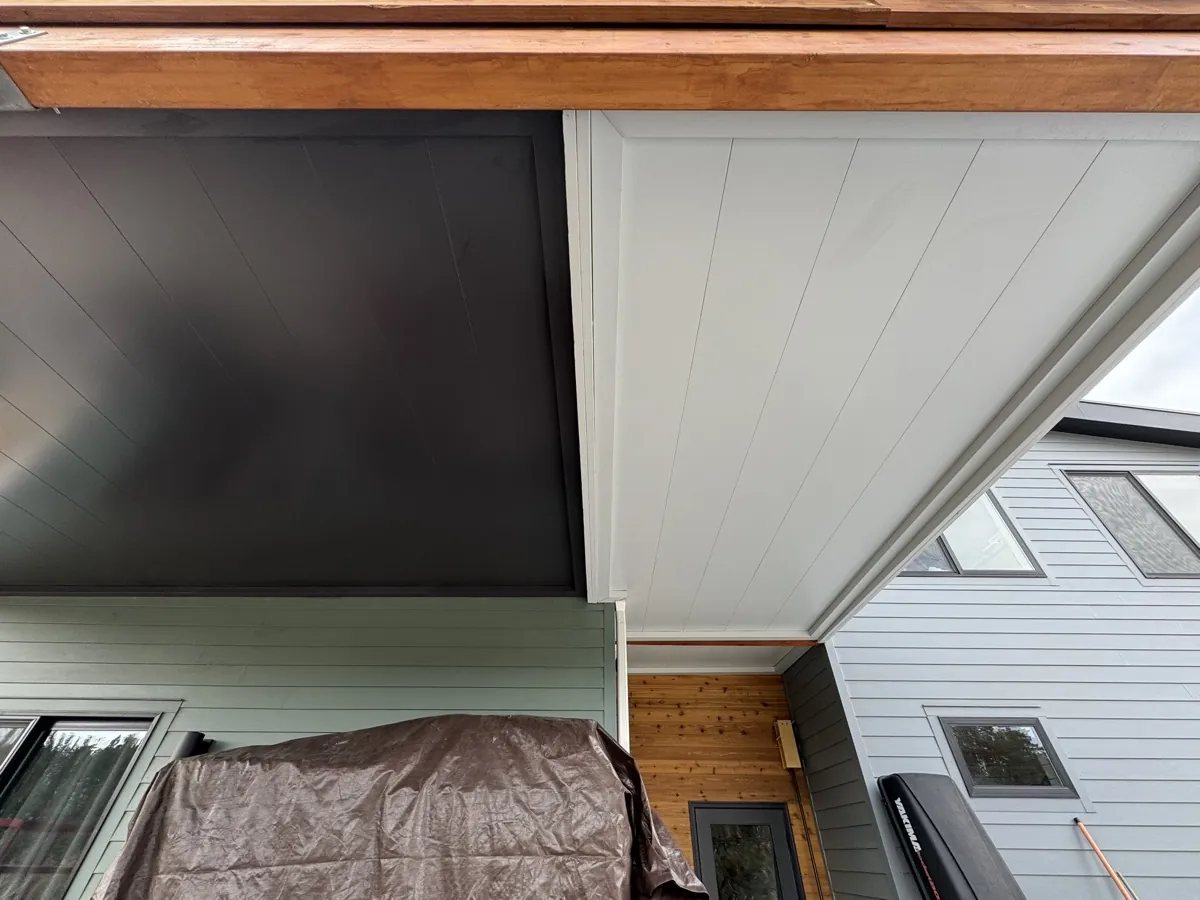
We build underdeck ceilings from heavy-gauge galvanized steel, not aluminum, and we have not moved off that call in 22 years. Steel is denser and stiffer, so it resists hail dents and it does not sag across a span the way aluminum does within 8 to 12 years. The rust worry is solved by the zinc coating, which is exactly what galvanized means. Gauge matters more than the metal name, and we use heavy gauge on purpose. If you are talking to any underdeck contractor, ask them their material gauge, because thin steel is barely better than aluminum.
This is the question at the center of how we build, so we want to answer it plainly. People shopping underdeck ceilings hear two materials, galvanized steel and aluminum, and the aluminum pitch usually sounds good on the surface. Lightweight, never rusts, easy to install. We looked hard at all of that 22 years ago, chose heavy-gauge galvanized steel, and have built on it every year since. Here is the real reasoning, not the sales version.
The Practical Difference Between the Two Metals
Set aside the chemistry for a second and think about it the way it matters on your deck. Steel is denser and stiffer than aluminum. That stiffness is the whole ballgame for a ceiling panel that has to hang flat across a span and stay flat for decades. When something pushes on aluminum, it gives more easily, and when something pushes on heavy-gauge steel, it holds. That is true under a snow load above, under the pressure of expansion and contraction, and under a hailstone coming in fast.
Colorado adds a second factor: freeze-thaw cycling. We swing from warm afternoon sun to a hard overnight freeze, sometimes in the same day, and metal expands and contracts with every cycle. Aluminum moves more than steel under the same temperature change, and that constant flexing works fasteners loose and stresses joints over years. Steel moves less, so the system stays tight longer. In a milder, steadier climate the gap matters less. In Colorado it matters a lot.
Why Aluminum Underdecking Sags
Here is the part that quietly disappoints people 8 to 12 years after an aluminum install. The panel that looked perfectly flat at handoff develops a sag, a waviness across the run, especially on a wider deck. This is not a defect or a bad install. It is the physics of span length against material stiffness. A panel has to bridge the distance between supports, and a less stiff material deflects more across that distance under its own weight plus whatever sits on it. Aluminum is the less stiff material, so given a long enough span and enough time and enough thermal cycling, it droops.
Heavy-gauge steel resists that deflection. It is stiff enough to hold a flat plane across the spans we work with, and it keeps holding it. When you look up at an underdeck ceiling 12 years in, you want to see the same crisp flat surface you saw on day one. Material stiffness is what decides whether you get that, and it is the single biggest reason we will not build these out of aluminum.
Not All Steel Is Equal: Gauge Is the Whole Game
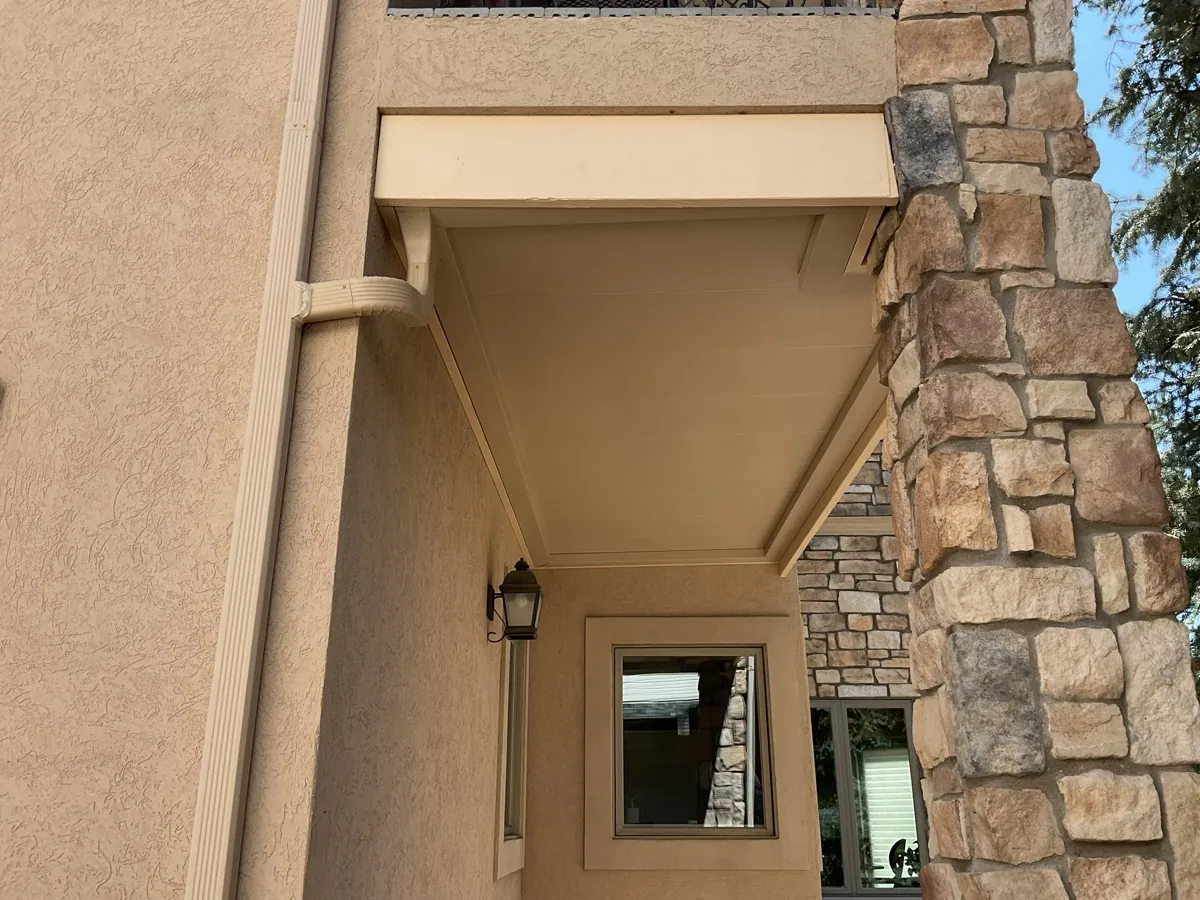
This is the trap, and it is worth slowing down on. “Galvanized steel” by itself does not guarantee a good system, because gauge decides how stiff and strong the steel actually is. Gauge is the thickness of the metal. Thin-gauge steel, the kind a budget installer might use to claim a steel system, is barely stiffer than aluminum and gives up a lot of the advantage we just walked through. It can dent, it can deflect, and it undercuts the whole reason to choose steel in the first place.
We use heavy-gauge galvanized steel deliberately, and that thickness is where the dent resistance, the flatness, and the long life come from. It costs more and it is harder to work with, and that is exactly why a lot of installers skip it. So if you are comparing underdeck quotes, the most useful question you can ask is not steel versus aluminum, it is “what gauge is your steel.” A vague answer or thin-gauge steel tells you most of what you need to know about how that ceiling will look in a decade.
The Rust Question, Answered Honestly
The fair pushback on steel is rust, and we are not going to wave it away. Bare steel left exposed to moisture rusts. The answer is the galvanizing itself. Galvanized means the steel is coated in zinc, and zinc protects the steel two ways: it forms a barrier between the metal and the air, and it sacrifices itself first if the surface is ever nicked, so the steel underneath stays protected. That is not a paint job that chips off. It is a metallurgical bond doing real work.
Then add Colorado’s biggest favor to metal: dry air. Rust needs sustained moisture to take hold, and our low humidity is about the friendliest environment galvanized steel could ask for. Between the zinc coating and the dry climate, a properly galvanized underdeck system holds up for the long haul here. The rust narrative scares people off steel in humid coastal markets. In dry Colorado it is largely a solved problem, and the stiffness advantage is worth far more than the rust worry costs.
What Happens When Hail Hits at 6,000 Feet
Colorado is hail country, and at 6,000 feet the storms come in hard. This is where the dent resistance stops being theory. A hailstone carries real energy, and when it strikes a ceiling panel the softer, less dense material takes the dent. Aluminum dents more readily under that impact, and once an underdeck panel is pocked with hail dimples it stays that way. Heavy-gauge galvanized steel takes the same hit and is far more likely to shrug it off, because it is denser and stiffer and there is simply more material standing in the way of the blow. After a Colorado hail season, the difference shows on the ceiling.

Why We Can Warranty Steel for a Lifetime
We made this material call 22 years ago and we have not second-guessed it, because we have watched how our own steel systems age across Colorado decades. That track record is what lets us put a lifetime warranty on the structure. We can warranty steel for life because we know exactly how heavy-gauge galvanized steel behaves in this climate, year after year, hail season after hail season. We could not say the same about an aluminum system that we expect to sag inside 12 years.
Being employee-owned and Colorado natives is part of why we will not cut this corner. We live with the results, we run into our customers around town, and a ceiling that sags or dents is our name up there. So the short version is this: ask any underdeck contractor whether they build in steel or aluminum, and if they say steel, ask the gauge. Then come let us show you the difference on a real install. Set up a free design consultation and we will walk you through exactly what we use and why.
Galvanized Steel vs Aluminum Questions
Why does Undercover Systems use galvanized steel instead of aluminum?
Steel is denser and stiffer than aluminum, so it resists hail dents and holds a flat plane across a span instead of sagging. It also moves less through Colorado freeze-thaw cycles, which keeps the system tight. Those advantages are why we chose heavy-gauge galvanized steel 22 years ago and have not moved off it.
Does aluminum underdecking really sag over time?
Yes, commonly within 8 to 12 years on wider decks. It is the physics of span length against material stiffness. A less stiff material deflects more across the same distance under its own weight and thermal cycling, so aluminum panels develop a wave or droop. Heavy-gauge steel stays flat.
Won’t galvanized steel rust in Colorado?
The galvanizing is the answer. The steel is coated in zinc, which forms a protective barrier and sacrifices itself first if the surface is nicked, so the steel underneath stays protected. Add Colorado’s dry air, which rust needs sustained moisture to form, and a properly galvanized system holds up for the long haul.
What does heavy-gauge actually mean?
Gauge is the thickness of the steel, and it decides how stiff and strong the panel is. Thin-gauge steel is barely better than aluminum. We use heavy-gauge galvanized steel on purpose, because the thickness is where the dent resistance, the flatness, and the long life come from.
How does steel hold up to Colorado hail?
Far better than aluminum. A hailstone carries real energy, and the softer, less dense material takes the dent. Heavy-gauge galvanized steel is denser and stiffer, so it is much more likely to shrug off the hit. After a Colorado hail season, the difference shows on the ceiling.
What should I ask an underdeck contractor about their material?
Ask whether they build in steel or aluminum, and if they say steel, ask the gauge. Thin-gauge steel gives up most of steel’s advantage, so a vague answer or thin steel tells you a lot about how that ceiling will look in a decade.
See the Difference on a Real Install
We will show you exactly what heavy-gauge galvanized steel looks like up close, and why we warranty it for life. Colorado natives, employee-owned, 22 years building underdeck systems.
Walk Your Deck With Us (303) 481-1967See our underdecking page · More posts · Book a free design consultation