Cleaning an Underdeck Ceiling Without Damaging the Finish
Mild dish soap, warm water, a soft-bristle brush, and a low-pressure rinse from above. Twice a year. That is the whole method. Skip the pressure washer, skip the bleach, skip the scrub pad, and the factory finish on your panels will outlast most things on your house.
The finish is the part homeowners worry about most. People call us before they ever pick up a sponge, because they paid for a clean, finished ceiling under their deck and the last thing they want to do is wreck it with the wrong cleaner. Good instinct. The finish is durable, but it is not bulletproof, and a few common cleaning habits will dull or scratch it faster than 22 Colorado winters ever could.
So here is the plain-language guide. No mystery, no upsell. Just what the finish actually is, what is safe to use on it, and what to keep far away from it.
What the finish actually is
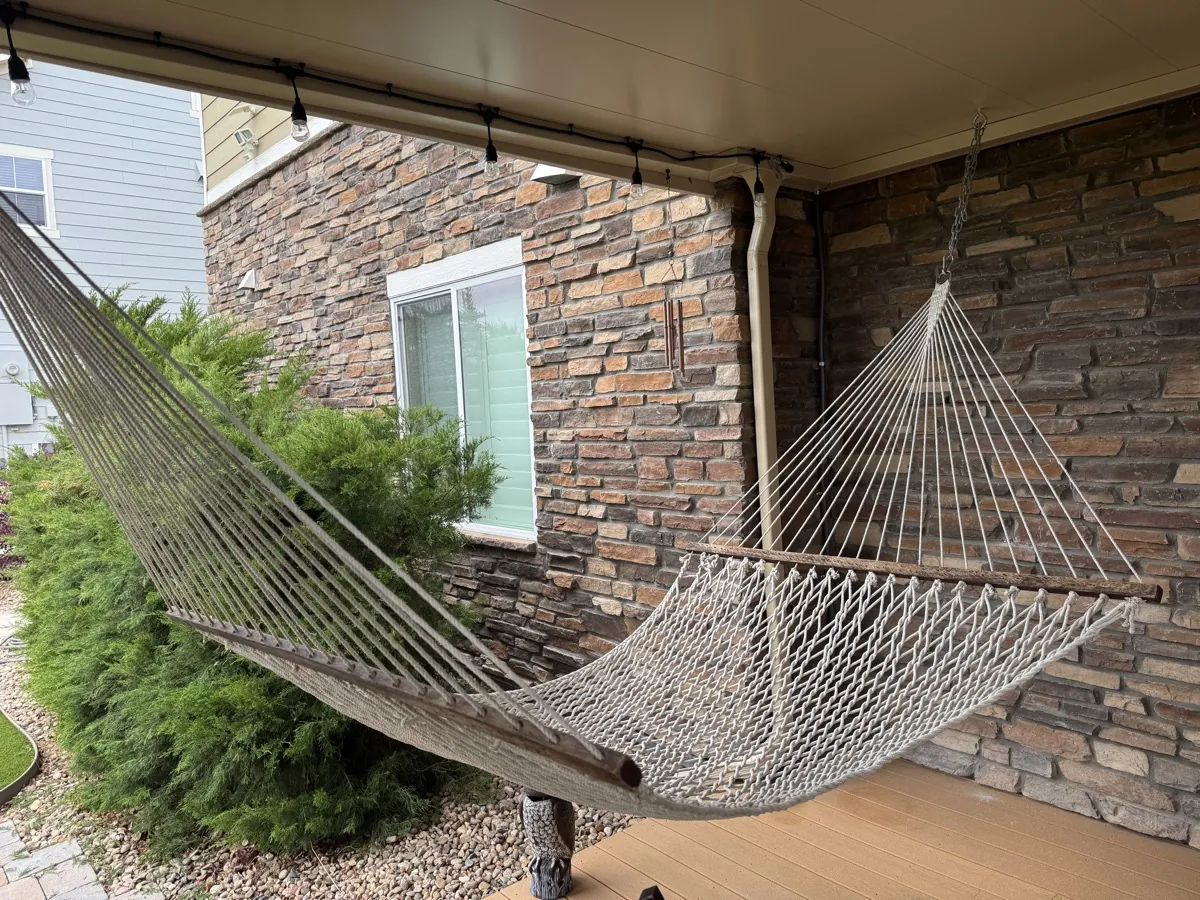
Our underdeck panels are galvanized steel with a factory-applied paint finish baked on at the mill. The galvanizing is a zinc coating bonded to the steel, and that zinc layer is what fights corrosion. The color you see is paint cured onto that surface under heat and pressure, which is why it bonds far tighter than anything brushed on at a job site.
That baked-on bond is the reason these panels hold up. It is also the reason you cannot treat the ceiling like a patio you are blasting clean. Three things weaken a finish like this: abrasion that physically grinds the paint off, harsh chemistry that eats at the coating, and standing moisture trapped against bare metal where the finish has already been compromised. Every rule below traces back to avoiding one of those three.
What is safe to use
The good news is that the safe method is also the cheap method. You almost certainly already own everything you need.
The whole kit
- A few drops of mild dish soap in a bucket of warm water. Nothing industrial. The same soap you wash dishes with.
- A soft-bristle brush on an extension pole, or a soft microfiber mop head. Soft is the operative word.
- A garden hose set to a normal flow, rinsing from above so gravity carries the runoff out toward the gutter edge.
Wet the panels, work the soapy water across them with the soft brush in long passes, then rinse. Rinsing from above matters because it pushes dirt toward the drainage edge instead of driving it deeper into the panel seams. Let it air dry. That is the entire job, and on a typical deck it takes one afternoon.
What will damage the finish
This is the section worth reading twice, because these are the moves that turn a simple cleaning into a repair call.
- High-PSI pressure washing. A pressure washer held close enough can drive water under the finish at the seams and chip the baked coating right off an edge. If you must use one, keep it on the widest fan tip, well back, and well under 1,200 PSI. Honestly, the garden hose is the smarter call.
- Bleach and bleach-based cleaners. Bleach is hard on coated metal and will dull the finish over repeated use. It also strips protective layers you cannot see. Keep it on your bathroom tile.
- Abrasive scrubbing pads and steel wool. Anything green-and-scratchy or made of wire will sand the paint thin. Soft bristles only.
- Wire brushes. Same problem, worse. A wire brush is the single fastest way to expose bare metal, which is exactly where corrosion starts.
If you remember one thing: the finish wants soft and mild, never hard and harsh.
Cleaning the gutter channel without bending it
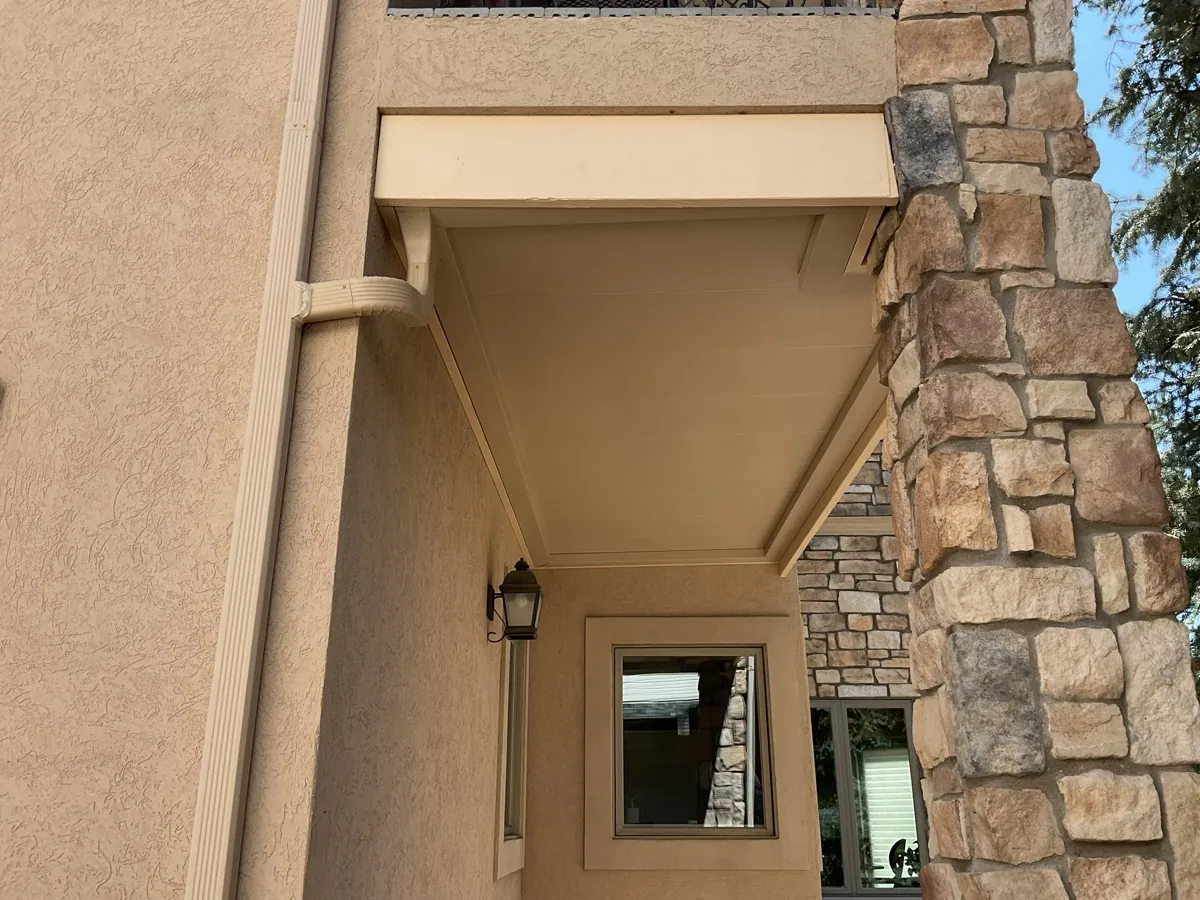
We see bent gutter channels more than almost any other self-inflicted damage. The integrated channel that runs the perimeter of your ceiling carries water out to the downspout, and it is shaped to hold a slope. Lean a ladder against it, jam a trowel down it, or pry at a clog with a screwdriver, and you can flex that slope out of true. Once the pitch is off, water pools instead of draining.
To clear it safely, scoop debris out by hand or with a soft plastic gutter scoop, working along the channel rather than digging straight down into it. Then flush it with the hose and watch the water run to the downspout. If the water moves cleanly, you are done. If it sits at one end, the channel may have shifted and that is a call to us, not a job for more force.
How often, and when, in Colorado
Twice a year is the floor. Our seasons are hard on anything outdoors, so the timing matters more than the frequency.
Clean once after spring snowmelt, when winter grit, sand, and whatever blew under the deck has settled onto the panels. Clean again before the fall freeze, so leaves and pine debris are not sitting in the gutter channel trapping moisture through the cold months. Homes under heavy pine cover, common up the foothills, may want a third pass in late summer when the needles really start dropping.
Reading what is on your panels
Not all surface deposits are the same, and the source tells you what you are dealing with.
- Reddish-brown streaking under pines is usually pine needle tannin, leaching out of fallen needles when they get wet. It is cosmetic and washes off with the soap method.
- White or grayish bird waste is acidic and worth cleaning promptly, because left to bake on it can etch a finish over time.
- Chalky white mineral spotting is hard-water deposit, often from sprinkler overspray or runoff. Soap and water handles light cases.
Early corrosion versus normal weathering
A finish that has mellowed slightly in tone over a decade is normal weathering and nothing to act on. What you are watching for is different: small rust-colored spots, bubbling under the paint, or a rough patch where the smooth surface used to be. That is the finish telling you the steel underneath has been reached, usually at a scratch or a chip. Caught early it is a small fix. Ignored, moisture works in and spreads it. If you spot any of that, photograph it and send it over before it grows.
A new install versus one that is 5 to 10 years old
A freshly installed ceiling barely needs more than a rinse for its first couple of years. The finish is fresh, the seams are tight, and there is nothing baked on yet. Your job early on is simply to keep the gutter channel clear so it drains.
A ceiling that is 5 to 10 years old has earned a closer look. The finish is still strong, but this is the age where a stray scratch from a stored ladder or a flexed channel from years of debris starts to matter. At this stage, pair your twice-yearly cleaning with a slow visual pass: run your eye along the seams, the edges, and the channel for anything that looks like the early corrosion above.
When to call us instead
Handle the routine cleaning yourself. It is genuinely simple and there is no reason to pay anyone for soap and water. Call us when you see early corrosion, when the gutter channel will not drain after you have cleared it, when a panel has a visible chip or dent, or when something just looks off and you would rather have a second set of eyes. Every system we install carries a lifetime warranty, and we would always rather look at a small thing early than a bigger thing later.
Common questions
Can I pressure wash my underdeck ceiling at all?
We recommend against it. If you do, use the widest fan tip, stay well back, and keep the pressure under about 1,200 PSI so you do not drive water under the finish at the seams. A normal garden hose rinse does the job with none of that risk, so that is what we suggest for nearly every home.
What soap is actually safe to use?
A few drops of ordinary mild dish soap in warm water. That is it. Avoid anything labeled bleach, degreaser, or heavy-duty cleaner, since those chemistries dull and weaken the baked finish over repeated use.
How often should I clean it in Colorado?
Twice a year minimum: once after spring snowmelt and once before the fall freeze. Homes under heavy pine cover often benefit from a third cleaning in late summer when needle drop is heaviest.
I see a small rust-colored spot. Is that a problem?
It can be. A small rust spot, a bubble under the paint, or a rough patch usually means the steel under the finish has been reached at a scratch or chip. Caught early it is a minor fix. Photograph it and send it to us so we can take a look before moisture spreads it.
I think my gutter channel is bent. What now?
Stop forcing it. The channel holds a precise slope, and prying or leaning on it can flex the pitch out of true so water pools instead of draining. Clear the debris gently by hand, flush with a hose, and watch how the water runs. If it sits at one end, give us a call rather than applying more pressure.
Want a second set of eyes on your ceiling?
Whether you are caring for a system we built or thinking about adding one, we will come out, walk the deck with you, and tell you exactly where things stand. No pressure, no charge for the look.
Walk Your Deck With Us (303) 481-1967