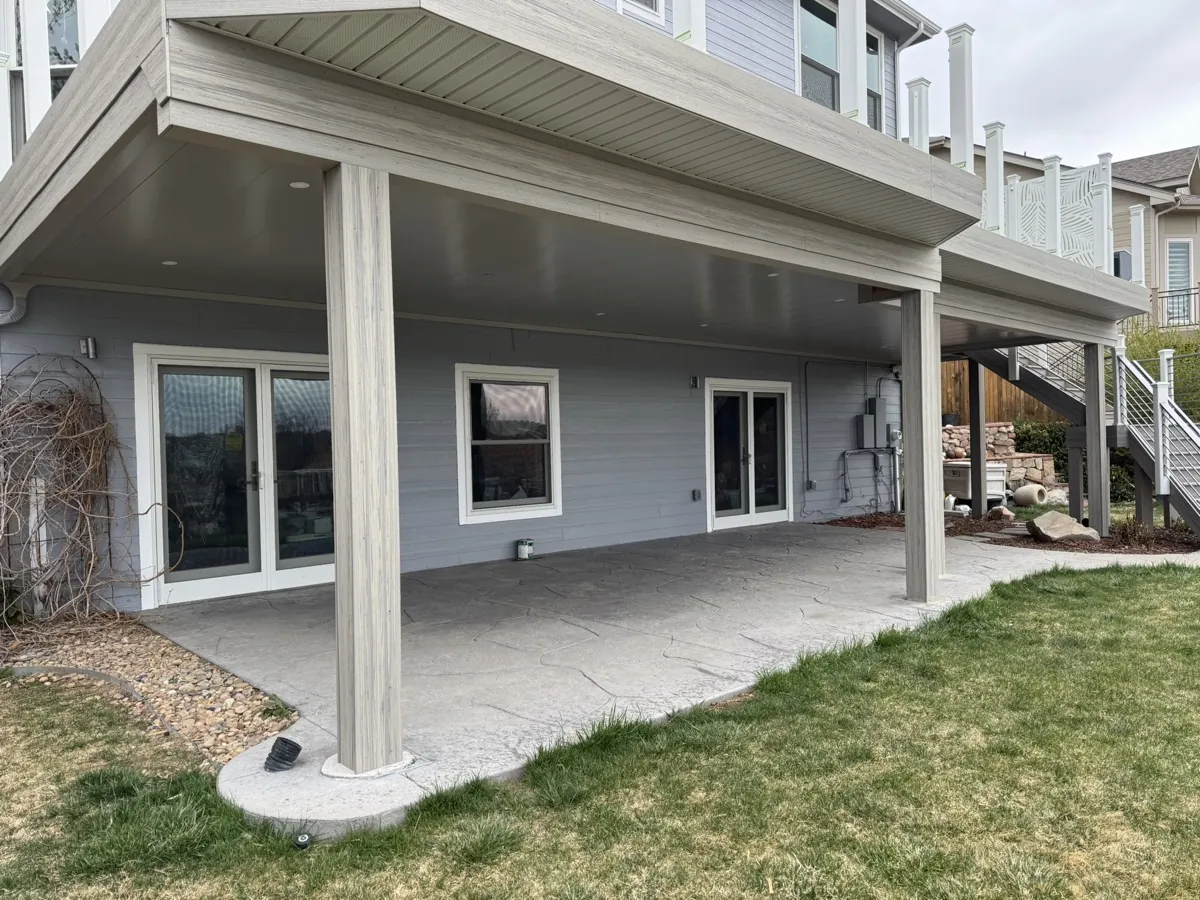
Our lifetime warranty covers the structural integrity of the underdeck system, the panel fastening, the gutter channel drainage, and material defects in the galvanized steel. It does not cover damage from the deck above failing, deliberate impact, weather beyond design load, or panels you modify yourself. Because we are employee-owned and Colorado natives, the people who stand behind it are not going anywhere. Most claims are minor fastener items in the first three years or drainage items in years three to seven, and we aim to be on-site within five business days.
A lot of contractors say “lifetime warranty” and leave it there, hoping you do not ask what that actually means. We think that is backwards. A warranty is only worth what its coverage says and who stands behind it, so we are going to spell out exactly what ours covers, what it does not, and why a lifetime promise from a 22 year old company is a different thing than the same words from a brand-new installer.
What the Warranty Covers
Our lifetime warranty protects the parts of the system we build and control. That means the structural integrity of the underdeck system itself, the framework and ceiling holding together as designed. It covers the panel fastening, so the panels stay secured the way we installed them. It covers the gutter channel drainage, the integrated channels that collect water from above and carry it away, staying sealed and flowing. And it covers material defects in the galvanized steel, because we chose heavy-gauge galvanized steel precisely so we could stand behind how it ages, and if a material flaw ever showed up, that is on us.
In plain terms, if the system we built does not perform the way we promised it would, we make it right. That is the heart of it.
What It Does Not Cover, Plainly
An honest warranty has limits, and pretending otherwise would be the dishonest move. Ours does not cover damage caused by the deck structure above failing, because we warrant the underdeck system we install, not the deck someone else built on top of it. It does not cover deliberate impact, the ladder driven through a panel or a stray baseball through the ceiling. It does not cover acts of nature that exceed the system’s design load, the truly extraordinary storm beyond what any reasonable system is engineered to take. And it does not cover panels damaged after a customer modifies them, because once the system is altered outside our work, we can no longer warrant that section.
None of those exclusions are loopholes we hide in fine print. They are the natural edges of what we can reasonably stand behind, and we would rather tell you about them at the kitchen table than spring them on you years later.

Why Employee Ownership Matters for a Lifetime Promise
Here is the part most warranty conversations skip, and it might be the most important. A lifetime warranty is only as good as the company still being around to honor it, and that is where so many of these promises quietly fail. The installer sells the business, retires, or gets rolled up by an out-of-state private equity firm, and the person you call about your ceiling is a stranger with no stake in the work.
We are employee-owned. The founder and the employees own this company, and they live in Colorado. We are not going to close, flip, or sell to a roll-up, because the people who would have to do that selling are the same people who built your system and have to look you in the eye around town. Employee ownership is not a slogan for us, it is the reason our lifetime warranty is something you can actually count on. The people who back it are the people who poured themselves into the install.
Warranty Call or Maintenance Visit?
It helps to know the difference, because not every issue is a warranty matter and we will always tell you straight which one you have. A warranty call is something that traces back to how the system was built: a fastener that should have held but did not, a drainage channel that should be sealed but is seeping, a material that failed when it should not have. That is on us and there is no charge.
A maintenance visit is upkeep that any system needs over the years, like clearing debris out of a drainage channel that has collected leaves, which is normal ownership rather than a defect. When you call, we figure out which it is honestly. We are not going to dress up routine maintenance as a non-covered item, and we are not going to dodge a real warranty issue. Straight answers, both directions.

The Claims We Actually See
After 22 years we know the pattern, and sharing it is part of being upfront. The typical warranty claim in the first three years is almost always fastener-related, a small settling or adjustment item we come out and correct. From years three through seven, claims trend toward drainage, usually a channel detail that wants attention as the system lives through Colorado seasons. Past that window, well-built systems mostly just keep working. There is no dramatic failure curve, and that predictability is exactly what 22 years of building the same way in the same climate buys you.
How We Respond
When you have a covered claim, the process is built to be quick and to keep our own people on the job. We aim for a site visit within five business days. We keep parts stocked locally, so we are not waiting on a shipment to make your ceiling right. And we use no third-party subcontractors on warranty work, because the crew that knows the system is the crew that should fix it. That last point matters more than it sounds. Plenty of companies hand warranty work to whatever sub is cheapest that week. We do not, ever.
Keeping Your Warranty Valid
Two things keep the coverage solid. First, proper installation, which is our job, means the system was built to our specification by our crew, and that is what we warrant. A system someone else modifies or a section reworked by another contractor falls outside what we can stand behind. Second, register and document your warranty when we hand off the project, and hang onto your paperwork and photos. It makes any future claim painless. We will walk you through registration at completion so it is done right from day one.
The last thing worth saying is the simplest. A lifetime warranty from a company that has been building underdeck systems for 22 years means something fundamentally different than the same words from a three-year-old installer. We have a two-decade record of standing behind our work in this exact climate, with the same employee-owners on the other end of the phone. That is what makes a lifetime promise real. Set up a free design consultation and we will go through the full warranty with you before you ever commit.
Lifetime Warranty Questions
What does the lifetime warranty cover?
The structural integrity of the underdeck system, the panel fastening, the gutter channel drainage, and material defects in the galvanized steel. If the system we built does not perform the way we promised, we make it right at no charge.
What does the warranty not cover?
Damage from the deck structure above failing, deliberate impact, acts of nature beyond the system’s design load, and panels damaged after a customer modifies them. These are the natural edges of what we can reasonably stand behind, and we explain them up front, not in fine print.
Why does employee ownership matter for the warranty?
A lifetime warranty is only as good as the company still being around to honor it. Because we are employee-owned and Colorado natives, we are not going to close or sell to a private equity roll-up. The people who built your system are the same people who stand behind it.
What is the difference between a warranty call and a maintenance visit?
A warranty call traces back to how the system was built, like a fastener or drainage detail that should have held, and there is no charge. A maintenance visit is normal upkeep, like clearing leaves from a drainage channel. We tell you honestly which one you have.
What do most warranty claims involve?
In the first three years, claims are almost always fastener-related settling items. From years three through seven, they trend toward drainage details. Past that, well-built systems mostly just keep working. There is no dramatic failure curve.
How fast do you respond to a warranty claim?
We aim for a site visit within five business days, keep parts stocked locally so we are not waiting on a shipment, and use no third-party subcontractors on warranty work. The crew that knows the system is the crew that fixes it.
Want the Full Warranty Walked Through?
We will go through exactly what is covered, what is not, and why 22 years and employee ownership make it real, before you ever commit. Colorado natives, employee-owned.
Walk Your Deck With Us (303) 481-1967More about us · More posts · Book a free design consultation