Mountain Town Installs: Summit and Grand County
We install across a 120-mile radius from Wheat Ridge, which puts Summit and Grand County firmly on our map. Mountain installs are a different animal: heavier snow load, a short build window from late May into September, ember resistance that matters, and access that takes real logistics. Our galvanized steel systems and Colorado-native crews are built for it.
We are in Silverthorne, Breckenridge, Winter Park, Fraser, and Granby on a regular basis. These towns sit at 9,000 to 10,000 feet, and a deck up there lives a different life than a deck in a Front Range suburb. So when someone in the high country asks whether their mountain home is a good candidate, the honest answer is yes, with a handful of things that are genuinely different and worth saying out loud.
Snow load is the headline
This is the one that matters most. A deck in Highlands Ranch and a deck in Breckenridge are not engineered to the same standard, because the snow that lands on them is not remotely the same. Summit County design snow loads run far heavier than Front Range suburban numbers, and that load sits on structures for months, not days.
Our underdeck systems are galvanized steel, engineered to carry that mountain load. That is not a small detail. An underdeck contractor who mostly works lower-elevation markets may bring a lighter system that was never sized for a Summit County winter. We design for the snow that actually falls where you live, because we live and work in Colorado and we are not guessing at the numbers.
The build window is short and hard
Up high, you cannot install year-round, and anyone who tells you otherwise is going to leave you with a problem. The realistic window in Summit and Grand County runs late May through September, and that is a hard stop on both ends.
Before late May there can still be snow on the ground and frozen footing. After September the weather turns fast and a job that gets caught by an early storm is a job done poorly. So mountain projects get scheduled around that window deliberately. If you are thinking about next summer, the conversation that happens over the winter is the one that gets you on the calendar in time.
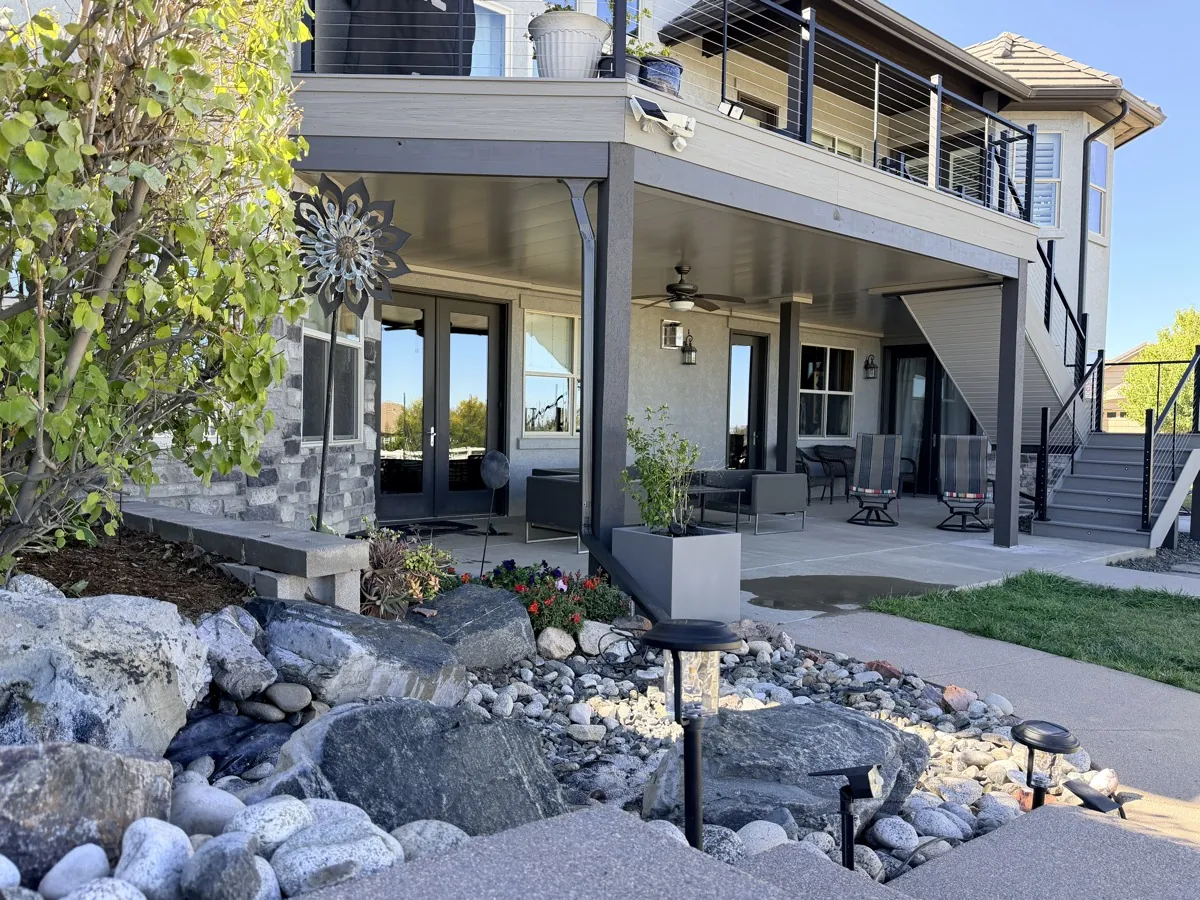
Ember resistance and material choice
Mountain communities live with wildfire risk in a way the suburbs do not, and material choice is part of how you respond to it. A galvanized steel underdeck ceiling does not feed a fire the way some materials can. In an ember-driven event, the underside of your deck is exactly the kind of sheltered, debris-collecting spot where embers find fuel.
A steel system gives you a non-combustible ceiling closing in that space, and in a fire-prone mountain setting that is a real consideration, not a marketing line. It is one more reason the material under your deck deserves thought rather than whatever is cheapest.
Second home or primary home?
A lot of mountain decks belong to second homes, and that shapes the right answer. The questions we ask are practical:
- Who maintains it? If you are three hours away most of the year, a low-maintenance system that does not need regular attention is worth more to you.
- Is it rented seasonally? A short-term rental gets harder use and less owner oversight, which again points toward a durable, hands-off system.
- Do you want zero fuss? Many mountain owners want the space finished, drained, and forgotten. That is exactly what these systems are good at.
For a primary mountain residence the calculus shifts toward daily livability and lighting. Either way, telling us how the home is used helps us point you at the right design.
Access and logistics
Working in the mountains takes more than working in Denver, and we would rather you know why a mountain quote reads differently than a metro one. There is a distance premium baked into driving a crew and a load of material up I-70 or over Berthoud Pass. On longer projects there may be crew lodging to arrange. Material staging takes planning, because you cannot always pull a truck right up to a mountain lot the way you can in a subdivision.
None of that is a problem. It is just real, and we plan for it instead of pretending it away. A contractor who quotes a mountain job like a suburban one is a contractor who has not done many mountain jobs.
What makes a mountain deck a good candidate
The best mountain candidates look a lot like the best Front Range ones, with the elevation turned up. An elevated deck with usable space underneath, sound framing above, and reasonable access is a strong candidate. A ground-level deck with no room beneath it, or a structure that needs framing repair first, is one we will be honest with you about. We would rather tell you a deck is not a good fit than sell you something that will not serve you.
Towns we work in
Summit and Grand County
Across the high country we regularly work in Silverthorne, Breckenridge, Winter Park, Fraser, and Granby, along with the smaller communities around them. If you are in a mountain town near these and you are not sure whether you are in our radius, just ask. The 120-mile reach from Wheat Ridge covers a lot of Colorado.
Permits at high elevation
Mountain municipalities vary in how they handle permits, and some are stricter than Front Range jurisdictions about exterior work in fire-prone or scenic areas. We sort that out as part of the project rather than leaving it on you to chase. Knowing your jurisdiction up front is one of the things that keeps a mountain build inside that short summer window.
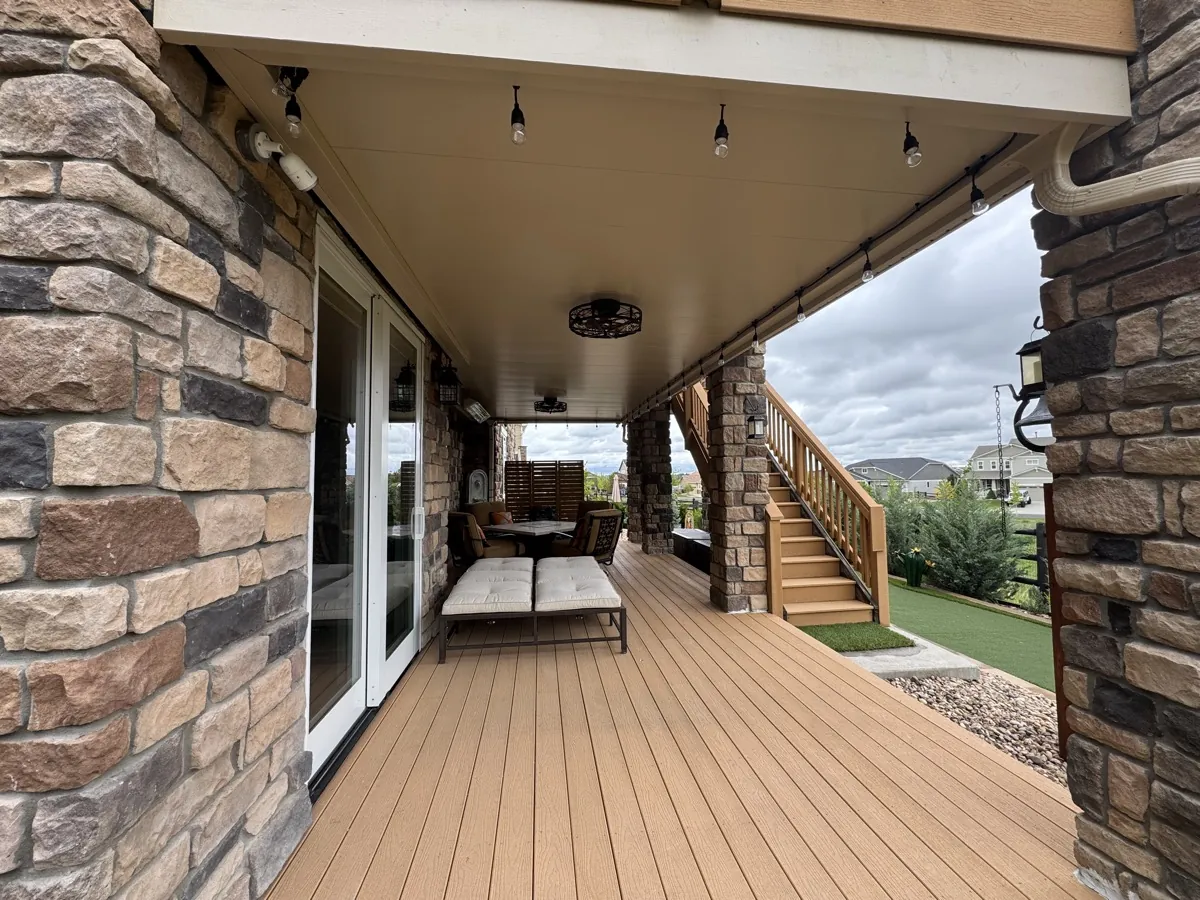
Why local crews build these differently
This is the part we feel strongest about. We are Colorado natives. We have driven these passes in June snow, we know which weeks the high country is actually workable, and we have engineered for Summit County snow loads enough times that it is second nature.
A metro contractor who does a mountain job once in a while, or an out-of-state outfit chasing high-country work, is learning on your deck. They may underbuild the snow load, misjudge the window, or get caught flat by access they did not plan for. Twenty-two years of building in this state, employee-owned, with a lifetime warranty behind the work, is a different proposition. When we say we understand mountain builds, it is because we have actually done them, up there, in the conditions that make them hard.
Common questions
Do you really install in Summit and Grand County?
Yes. Our 120-mile radius from Wheat Ridge covers Silverthorne, Breckenridge, Winter Park, Fraser, Granby, and the communities around them. If you are unsure whether your mountain town falls in range, just ask us.
Are your systems built for mountain snow load?
They are. Our galvanized steel underdeck systems are engineered for the heavier design snow loads at 9,000 to 10,000 feet, which run well above Front Range suburban numbers. We design for the snow that actually falls where you live.
When can you install up high?
The realistic mountain window is late May through September, and it is a hard stop on both ends. Snow and frozen footing rule out early spring, and weather turns fast after September. We schedule high-country projects deliberately around that window.
Does the material help with wildfire risk?
A galvanized steel underdeck ceiling is non-combustible and does not feed a fire the way some materials can. In an ember-driven event, the sheltered underside of a deck is exactly where embers find fuel, so a steel ceiling is a meaningful consideration in fire-prone mountain communities.
Why does a mountain install cost more than a Front Range one?
There is a distance premium for driving a crew and material into the high country, sometimes crew lodging on longer jobs, and extra material staging because mountain lots are harder to access. We plan for all of it up front rather than surprising you with it later.
Got a deck in the high country?
We will tell you straight whether your mountain home is a good fit, what the snow load demands, and how the summer window shapes your timeline. Let us walk it with you.
Walk Your Deck With Us (303) 481-1967