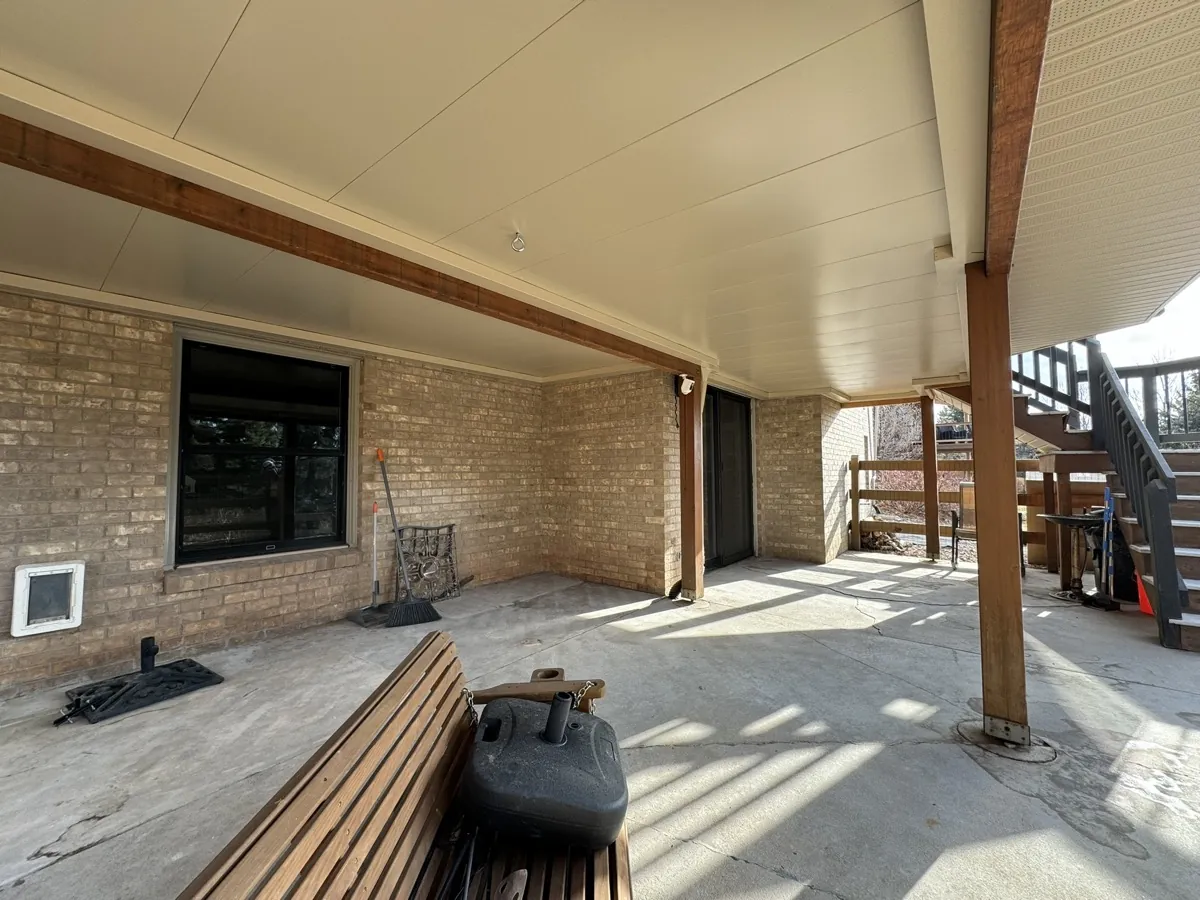
An underdeck ceiling captures the dry space under your existing deck. A roof extension builds new covered structure off the house, and at the same footprint it typically costs two to three times as much because you are framing, roofing, and pouring footings from scratch. For most Castle Rock homes, especially walk-out basement layouts with a deck already up top, the underdeck is the smarter spend. The roof extension wins only in specific situations. Here is how to tell which one fits.
If you want covered outdoor space at your Castle Rock home, these are the two real options, and people mix them up all the time. They solve a similar problem in very different ways, at very different prices. Let us lay out what each one actually is so you can see which makes sense for your house before you spend a dollar.
What Each One Actually Covers
An underdeck ceiling system works with structure you already have. You have an elevated deck, and the space underneath it currently gets rained on through the gaps in the boards. An underdeck system installs a ceiling beneath that deck with an integrated drainage channel, so the water from above is collected and carried away. The result is a dry, finished room under your deck. The deck on top keeps working exactly as it did.
A roof extension is new construction. You are building a covered structure that projects out from the house, with its own roof, posts, and footings, usually as a covered patio at ground level. It is a bigger build that changes the footprint of your home and your roofline. Both give you covered outdoor space, but one captures space you already own and the other builds new space from the ground up.
Permits and Complexity in Douglas County
The two paths look very different at the Douglas County permit counter. An underdeck system attaches to existing structure, so the permit is straightforward and the fee is a small line on the project. We pull it, handle the inspections, and close it out. Start to finish, most underdeck installs run a few days.
A roof extension is a structural addition, which means new footings, framing, and roofing all subject to inspection, plus the engineering and review that go with new construction. The permitting is heavier, the timeline is measured in weeks rather than days, and on an HOA-governed Castle Rock lot the architectural review is more involved because you are changing the look of the home from the street. None of that makes a roof extension wrong, but it is a genuinely larger project to take on.
The Cost Gap at 400 Square Feet
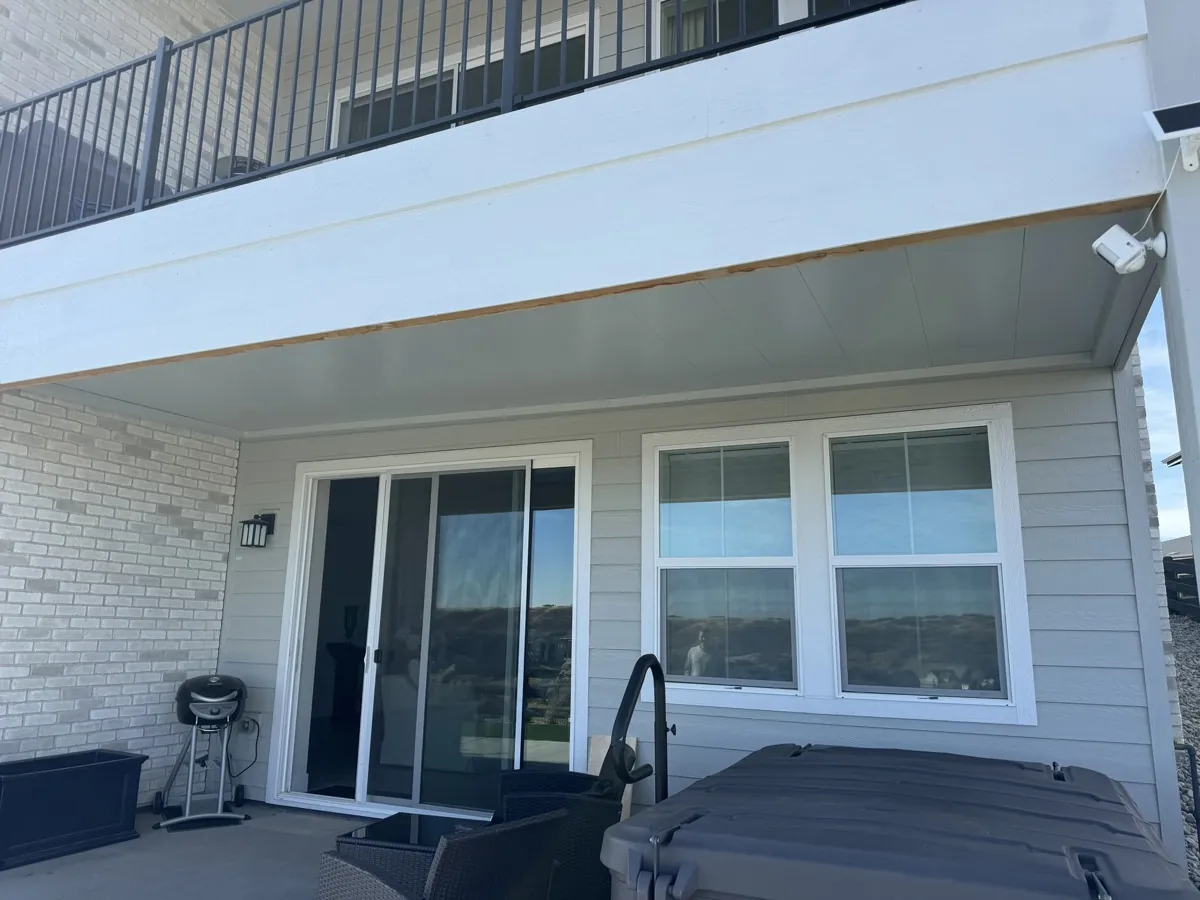
Cost is where the two options separate hardest. A heavy-gauge galvanized steel underdeck ceiling captures space you already have framed, so it is the far lighter spend of the two. A roof extension covering the same footprint carries footings, framing, roofing, and finish work, and you are often looking at two to three times the cost for the roof extension.
That gap exists because you are buying very different amounts of construction. The underdeck captures space that is already framed and already has a deck above it. The roof extension builds everything new. When two options both deliver covered outdoor living and one costs a third as much, the math deserves a hard look before anyone reaches for the bigger build.
Snow Load, and What You Give Up Either Way
Both options have to handle a Castle Rock winter. A heavy-gauge steel underdeck is built for the load. The deck above already carries the snow, and the steel ceiling underneath stays dry and stable through it. A roof extension also handles snow when it is engineered correctly, which it has to be, because it is new structure that catches and holds load on its own.
Each choice has a real tradeoff. With a roof extension, you are not using the deck that already sits up top in the same way, and that elevated deck and its view usually still exist above the new covered patio, which can create access and design awkwardness. With an underdeck, you keep the deck above fully in play, but the space underneath is covered rather than fully enclosed. It is a finished outdoor room, not a sealed addition. For most people wanting covered outdoor living in Colorado, open and covered is exactly what they want anyway.

Three Home Types, and Our Recommendation Framework
Which option fits comes down to your home. The walk-out basement home is where the underdeck shines, and Castle Rock is full of them. You have a deck off the main floor and a grade-level patio door below it, so an underdeck ceiling turns that lower area into dry, usable living space that connects right to the walk-out. This is the clearest win for an underdeck, every time.
The flat-lot home with no elevated deck is the case where a roof extension makes more sense, because there is no deck overhead to build a ceiling under. If you want covered space and the structure is not there yet, you are building new either way. And the home with a tall second-story deck and unused ground beneath usually points back to the underdeck, since you already have a large covered footprint waiting to be finished. Our framework is simple. If you already have a deck and want the space beneath it usable, the underdeck wins on cost, speed, and permit ease almost every time. If you have no overhead structure to work with, the roof extension earns its place. The honest answer depends on your house, and we will tell you which one we would build if it were ours. Have us come take a look and we will give you a straight recommendation.
Underdeck vs Roof Extension Questions
What is the difference between an underdeck ceiling and a roof extension?
An underdeck ceiling installs beneath your existing deck with integrated drainage to create dry space below. A roof extension is new construction that builds a covered structure off the house with its own roof and footings.
How much cheaper is an underdeck than a roof extension?
An underdeck is often about a third of the cost of a roof extension covering the same footprint, because it captures space you already have framed instead of building new structure from scratch.
Which one is easier to permit in Douglas County?
The underdeck. It attaches to existing structure, so the permit is simple and the fee is a small line on the project. A roof extension is a structural addition with heavier permitting, engineering, and a longer timeline.
Do both handle Colorado snow load?
Yes, when built correctly. A heavy-gauge steel underdeck sits under the deck that already carries the load. A roof extension carries snow on its own new structure and must be engineered for it.
Why is the underdeck the better fit for walk-out basement homes?
A walk-out home already has a deck off the main floor and a grade-level area below it. An underdeck ceiling turns that lower area into dry, finished living space that connects straight to the walk-out. It is the clearest case for the underdeck.
When does a roof extension actually make more sense?
When you have a flat lot with no elevated deck to build a ceiling under. With no overhead structure, you are building new either way, so a roof extension is the path to covered space.
Not Sure Which One Your Home Needs?
We will look at your deck, your lot, and your goals, then tell you straight which option we would build. Colorado natives, employee-owned, lifetime warranty.
Walk Your Deck With Us (303) 481-1967See our full Castle Rock underdeck page · More posts · Book a free design consultation