Why Galvanized Steel Outlasts Aluminum in Colorado
The short versionColorado is harder on outdoor materials than almost anywhere else: intense high-altitude UV, big day-to-night temperature swings, frequent hail, and freeze-thaw working on the footings. Aluminum struggles under all four. Galvanized steel shrugs them off. After 22 years of installs here, the steel systems we put in 15 years ago are still performing, while aluminum from other contractors tends to show its age around year eight to ten.
This is the companion to our broader galvanized steel versus aluminum comparison. That one covers the general case. This one is about one thing only: how each material behaves in Colorado specifically, because the climate here changes the answer.
Why Colorado is a harder test than most of the country
Aluminum does fine in a lot of places. A coastal underdeck in a mild climate, a covered patio in the South, plenty of those installs hold up for years. The problem is that Colorado stacks four punishing conditions on top of each other, and few markets do that.
- UV at altitude. Thinner air at a mile high and above means more ultraviolet reaching the surface. Sun exposure that would be moderate at sea level is intense here, and it degrades finishes faster.
- Temperature swings. A 40-degree gap between a sunny afternoon and a clear night is normal on the Front Range. Materials expand and contract through that range every single day.
- Hail. Colorado sits in one of the most hail-prone corridors in the country, and the stones are not small. Impact resistance is not optional here.
- Freeze-thaw. Water in the soil freezes and thaws repeatedly through the colder months, heaving and settling the ground that post footings sit in.
Any one of these is manageable. The combination is what sorts the materials that belong here from the ones that do not.
How aluminum behaves under Colorado stress
Aluminum has real strengths, but the conditions above hit its specific weak points.
Start with thermal movement. Aluminum has a high coefficient of thermal expansion, which is the technical way of saying it moves a lot when the temperature changes. Across those daily 40-degree swings, panels expand and contract more than steel does, and that constant cycling works fasteners loose over time. The system that was tight on install day develops rattle and play years later.
Then there is hail. A solid hailstone hitting aluminum leaves a dent, and that dent is permanent. Aluminum does not spring back. After a few seasons of Front Range storms, an aluminum surface can read like a golf ball, and there is no fixing it short of replacement.
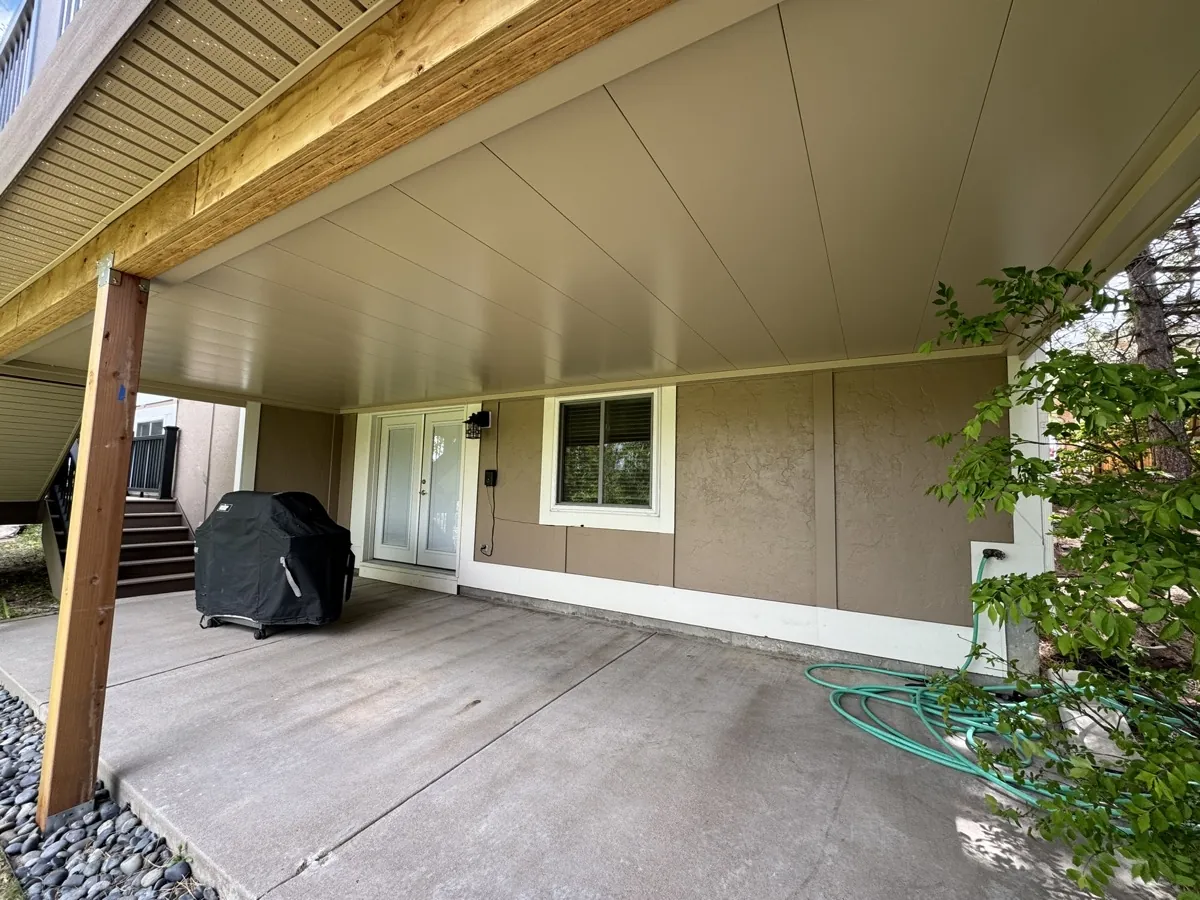
Finally, sag. Under a span load, aluminum deflects, and heat makes it worse. A panel carrying its own weight plus whatever snow or debris lands on it will sag more as it warms, and on a wide span that shows up as a visibly wavy ceiling line.
How galvanized steel behaves under the same stress
Steel answers each of those points, and the galvanizing answers the one weakness people worry about with steel.
The zinc galvanized coating is not paint. It is a sacrificial protector. Rather than sitting on top as a layer that can chip and let corrosion start underneath, the zinc bonds to the steel and gives itself up first, protecting the metal beneath even where the surface gets scratched. That is a fundamentally different and more durable kind of protection than a painted finish, and it is built for exactly the kind of abuse Colorado hands out.
On hail, steel wins on stiffness. Dents are rarer and shallower because the material does not deform as easily under impact. A storm that would pockmark aluminum often leaves galvanized steel untouched.
On sag, steel’s stiffness-to-weight ratio means minimal deflection across a span, and it does not soften and sag further in the heat the way aluminum does. The ceiling line that looks straight on day one still looks straight a decade in.
Zinc does not sit on the steel like paint. It gives itself up to protect the metal underneath. That is why it lasts.
What 22 years of installs tells us
We do not have to theorize about this, because we have been installing in Colorado for 22 years and we go back to these jobs.
The galvanized steel systems we put in 15 and more years ago are still performing. Not limping along, performing, doing exactly what they did the day we finished. Meanwhile, the aluminum underdeck systems we occasionally come across from other contractors tend to be showing their age right around year eight to ten: loosened fasteners, hail dimpling, a tired finish.
That gap is not a small one, and it is the whole reason we made the material call we did.
Why the Front Range in particular is rough on aluminum
It is worth being specific about why this matters more here than in the places aluminum does fine. The Front Range combines high hail frequency, intense altitude UV, and active freeze-thaw all in the same location. Coastal and Southern markets where aluminum has a good reputation usually get one or two of those, not all three at once.
An aluminum system that performs admirably in a mild coastal climate is simply not facing the same test it faces in Castle Rock or Monument. Judging the material by its reputation elsewhere is how homeowners end up disappointed eight years in.
The real cost over 20 years
Aluminum can come in cheaper up front, and that is the pitch. But the number that matters on a system meant to last is the 20-year number, and that is where the math turns.
If an aluminum system needs significant repair or full replacement around year ten, you are buying it close to twice across that span, plus the labor and the disruption each time. A galvanized steel system that runs the full 20-plus years without that intervention is the cheaper choice over the life of the deck, even when it costs more on install day. Cheaper up front and cheaper overall are not the same thing, and on this product they point in opposite directions.
The weight argument, honestly
Aluminum’s advocates lead with weight, and they are not wrong that aluminum is lighter. The fair question is how much that matters for an underdeck application specifically.
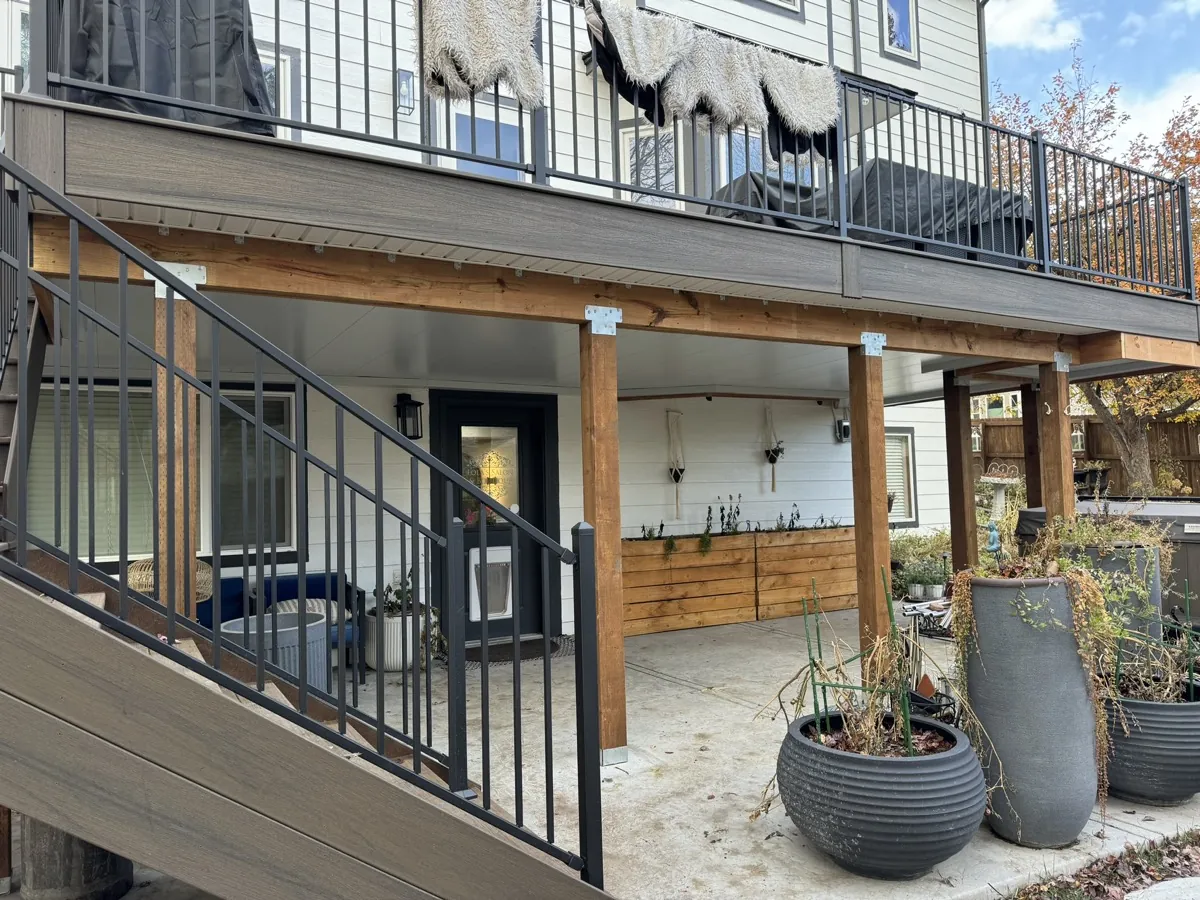
For underdeck, the answer is: less than they suggest. The system attaches to existing deck framing that is already engineered to carry a deck full of people and furniture. The weight difference between steel and aluminum panels is well within what that structure handles without a second thought. Weight is a genuine factor in some applications. Holding a ceiling under a deck is not really one of them, which means you give up almost nothing in trade for everything steel adds in durability.
What to ask when a contractor quotes you aluminum
If someone is proposing an aluminum underdeck system, a few questions will tell you how carefully they have thought about your climate.
- How does this finish hold up to high-altitude UV over 15 years, and is the coating a paint layer or something bonded?
- What happens to this surface in a serious hailstorm, and are dents repairable or permanent?
- How much does it move and sag across our daily temperature swings, and what does that do to the fasteners over time?
- Can you show me one of your aluminum installs that is ten or more years old here in Colorado?
That last one tends to be the most revealing. Performance you can go look at beats any spec sheet.
Common questions
Does not aluminum resist rust better than steel?
Bare steel rusts, which is exactly why we use galvanized steel. The zinc coating is a sacrificial protector bonded to the metal, so it shields the steel even where the surface is scratched. You get steel’s strength with corrosion protection built to outlast a painted finish.
Is hail really that big a factor for an underdeck ceiling?
It is in Colorado. We sit in a heavy hail corridor, and aluminum dents permanently under impact while galvanized steel resists it. Over several Front Range storm seasons, that difference is the gap between a clean ceiling and one that looks pockmarked.
Why does UV matter more here than other places?
At altitude there is less atmosphere filtering ultraviolet, so the sun is more intense than at sea level. That accelerates the breakdown of finishes. It is a major reason aluminum systems that do fine in milder climates show their age faster in Colorado.
Is steel worth the higher up-front cost?
Over a 20-year horizon, yes. If aluminum needs major repair or replacement around year ten and steel runs the full span without it, the steel system is cheaper overall once you count the second purchase and the repeated labor. Cheaper on install day is not the same as cheaper over the life of the deck.
Does not aluminum’s lighter weight make it the better choice?
Not for underdeck specifically. The system hangs from deck framing already built to carry people and furniture, so the weight difference is well within what the structure handles. You give up almost nothing on weight and gain a lot on durability by choosing steel.
Build it once, for Colorado
We have spent 22 years watching how materials hold up to altitude UV, hail, and freeze-thaw. Let us show you what galvanized steel looks like in person, on a deck like yours.