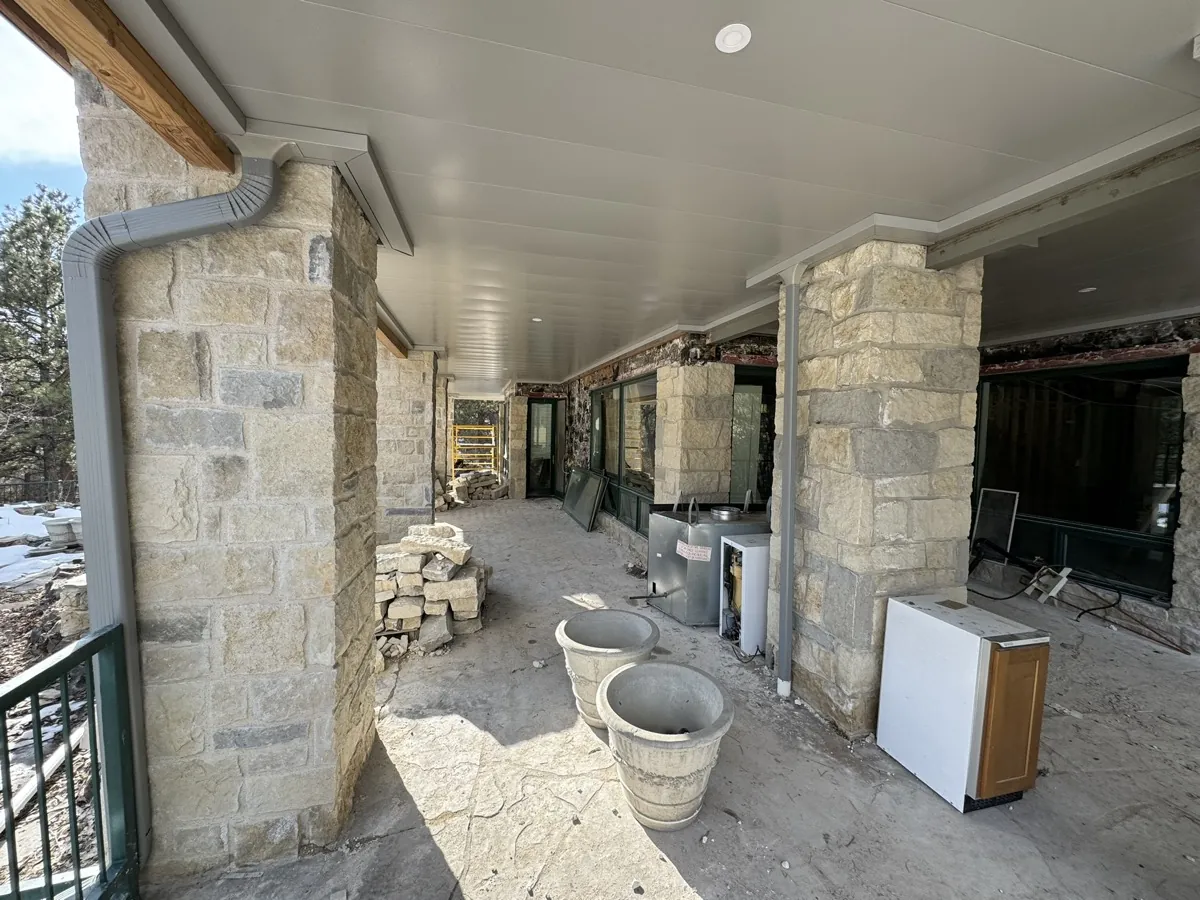
At 6,000 feet the Front Range sun hits a Colorado Springs pergola with far more UV than the same structure would see at sea level. That intense light bleaches and brittles wood fast and demands a smart cover choice. We build in heavy-gauge aluminum and galvanized steel that holds its color and shape, and we match the cover, open lattice, polycarbonate, or louvered, to how your deck faces the sun.
People move to Colorado Springs for the sunshine. More than 240 sunny days a year is a real selling point, right up until it is beating down on your back patio at three in the afternoon and there is nowhere to sit. A pergola is the answer, but the same sun that makes the region so appealing is exactly what destroys a poorly chosen pergola. At 6,000 feet on the eastern edge of the Front Range, ultraviolet exposure is significantly stronger than most of the country ever sees, and it shapes every material decision we make on a Colorado Springs build.
After 22 years building outdoor structures across Colorado, we have watched a lot of pergolas age in this light. The ones that hold up have two things in common: the right frame material and the right cover for the orientation. Here is how we think about both.
Why Front Range UV Is So Hard on Wood
Cedar and other wood pergolas are beautiful the day they go up. In Colorado Springs light they do not stay that way. The thin, dry, high-altitude air lets far more UV through than the atmosphere at lower elevations filters out. That radiation breaks down the lignin in wood, so a cedar beam that looks warm and rich in year one is graying, checking, and splitting by year three unless it gets sealed or stained annually. Most homeowners do that once and then life gets busy. By year eight the structure looks tired, and repairs cost more than a metal build would have from the start.
The low humidity makes it worse. Wood shrinks and swells with big moisture swings, and Colorado Springs delivers dramatic day-to-night and season-to-season changes. Add the monsoon-season wet spells and the hard winter freeze-thaw, and a wood pergola is fighting the climate on every front. It can be done, but it is a maintenance commitment that never ends.

Why We Build in Heavy-Gauge Metal
We build Colorado Springs pergolas in heavy-gauge aluminum and galvanized steel. Aluminum does not rust, never needs painting, and does not warp through freeze-thaw. Its powder-coat finish is engineered to hold color under exactly this kind of UV load, so the structure looks the same in year fifteen as it did in year one. Galvanized steel is the heavier-duty option and carries the most snow load, which matters for a wet spring storm that can drop a foot in a night. Both come with a long finish warranty and ask nothing beyond an occasional wash.
There is a hail dimension too. Colorado Springs sits in hail alley, and a metal frame shrugs off a storm that would gouge and split a wood beam. Between the UV, the hail, and the snow, metal is not just the low-maintenance choice here, it is the durable one. Many established Colorado Springs communities also favor clean, consistent exteriors that hold their appearance, and metal delivers that far better than wood over time.
Matching the Cover to the Sun
The frame is half the decision. The cover is the other half, and in this UV it is where comfort is won or lost. Open lattice is the simplest option and looks great with climbing plants or string lights, but it does little to block the direct afternoon sun, which on a west or south-facing Colorado Springs deck is intense. Polycarbonate panels shed rain and filter UV while still letting light through, a strong choice for a patio that catches full afternoon sun toward Cheyenne Mountain or the Broadmoor. Louvered covers are the most flexible: open the blades for a clear evening, close them when the sun is blazing or a monsoon storm rolls in.
Orientation drives the answer. The same pergola in two different corners of the same yard performs very differently. A north-facing spot stays cooler and can lean toward open lattice. A west-facing deck taking the brunt of the Front Range sun almost always wants polycarbonate or louvered. We look at sun path, tree cover, and prevailing wind on-site before recommending a layout, because a cover chosen for the wrong exposure leaves you baking exactly when you wanted shade. Our Colorado Springs pergola page goes deeper on the frame and cover options if you want the full rundown.

Snow Load Is the Other Half of the Equation
UV gets the attention because it works on a pergola every single day, but the Colorado Springs climate has a second demand that quietly decides how a structure is engineered: snow. A wet spring storm on the Front Range can drop a foot or more overnight, and heavy, saturated snow is far more punishing than the dry powder people picture. A cover full of that weight puts real load on the rafters, beams, and posts, and a frame sized for a mild climate simply is not built for it. This is where heavy-gauge metal earns its place a second time. We engineer posts and beams for real Front Range snow loads rather than the bare-minimum spec, and galvanized steel carries the most when the structure needs to hold a serious load. A wood pergola that has already been weakened by UV checking and splitting is exactly the one you do not want under a March snow dump.
The cover choice interacts with snow too. A solid or louvered cover holds snow until it melts or you clear it, so the frame under it has to be ready for that. Open lattice sheds most of it. We factor how your chosen cover behaves in a storm into how we size the frame, so the two decisions are never made in isolation. That is the advantage of building the whole thing as one engineered system instead of dropping a catalog kit onto a Colorado Springs deck and hoping the numbers work out.
Where the Pergola Sits Changes Everything
Two identical pergolas in two different corners of the same Colorado Springs yard will perform completely differently, and orientation is the reason. A west-facing deck takes the full brunt of the Front Range afternoon sun, the harshest light of the day at this elevation, so it almost always wants a louvered cover you can close against the glare or polycarbonate that filters the UV. A south-facing spot gets strong sun for most of the day. A north-facing corner stays cooler and shadier and can happily lean toward open lattice with string lights. Tree cover shifts it again: a mature ponderosa or a stand of cottonwoods throwing afternoon shade can change what the right cover is entirely.
Prevailing wind matters as well, especially near the mountains where storms drive in from the west and afternoon gusts pick up off the plains. We look at all of it on-site, sun path, shade, and wind, before recommending a layout, because a cover chosen for the wrong exposure leaves you baking exactly when you wanted to be sitting outside. A pergola is supposed to make the deck usable at three in the afternoon in July, and getting the orientation and cover right is what makes that happen rather than just adding a good-looking frame the sun still owns.
Colorado Springs Pergola and UV Questions
Is the sun really stronger in Colorado Springs?
Yes. At 6,000 feet the thin, dry air filters out far less ultraviolet radiation than lower-elevation atmospheres, so UV exposure on the Front Range is significantly stronger. That is why material and cover choices that would be fine elsewhere fail faster here.
Why not build a cedar pergola?
Cedar looks great initially but the intense Front Range UV bleaches and splits it within a few years unless it is sealed or stained annually. Add low humidity, hail, and freeze-thaw, and wood becomes a constant maintenance job. We build in metal so the structure holds up without the upkeep.
Will a metal pergola get too hot in the sun?
The frame itself does not radiate meaningful heat into the space. Comfort comes from the cover. A polycarbonate or louvered cover blocks or filters the direct afternoon sun, which is what actually cools the patio. We match the cover to how your deck faces the sun.
Which cover is best for a west-facing Colorado Springs deck?
A west-facing deck takes the full brunt of the Front Range afternoon sun, so we usually recommend a louvered cover you can close against the glare, or polycarbonate that filters UV while shedding rain. Open lattice is better suited to cooler north-facing spots.
Does a metal pergola hold up to hail?
Heavy-gauge aluminum and galvanized steel shrug off the hail that Colorado Springs sees every summer, where a wood beam would gouge and split. Between UV, hail, and snow, metal is the durable choice for this climate, not just the low-maintenance one.
A Pergola That Beats the Front Range Sun
We will read your sun exposure, walk the cover options, and design a pergola that holds up to the light at 6,000 feet. Colorado natives, employee-owned, lifetime warranty.
Walk Your Deck With Us (303) 481-1967See our full Colorado Springs page · More posts · Book a free design consultation