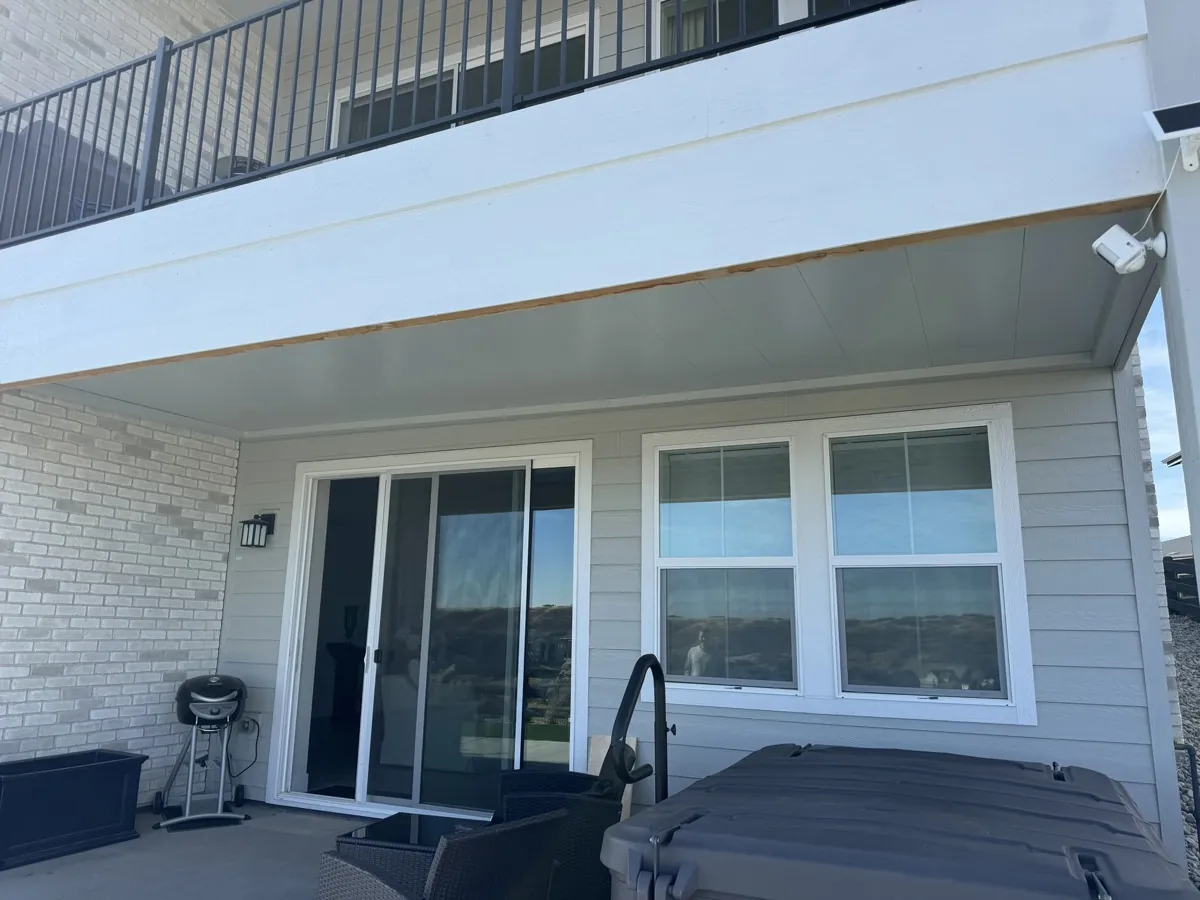
Colorado Springs sits inside what insurers call hail alley, and that single fact should drive what your Underdeck ceiling is made of. A hard summer hailstorm can pit and dent lighter panels in one afternoon. We build in heavy-gauge galvanized steel because it takes the hit, holds its shape, and keeps draining the patio below dry for the life of the deck. The material choice is the whole game here.
If you have lived in Colorado Springs through a summer, you already know the drill. A clear morning turns dark by early afternoon, the sky drops something heavy off the mountains, and ten minutes later the street is white and the neighbors are out inspecting their cars. Colorado Springs and the surrounding Front Range see some of the most frequent damaging hail in the country. That reality shapes roofs, gutters, siding, and it should absolutely shape the ceiling you hang under an elevated deck.
After 22 years building Underdeck systems across Colorado, we have a simple rule for this market: the material has to survive hail alley on its own, without asking the homeowner to baby it. That rules out a lot of what gets marketed as an underdeck solution nationally. This post walks through why, and what we build instead.
What Hail Actually Does to an Underdeck Ceiling
An Underdeck system hangs below your deck and slopes toward a gutter, so most of it is somewhat shielded by the deck boards overhead. That leads some people to assume hail is not a factor. It is. The exposed edges, the perimeter gutter, the downspout, and any portion of the ceiling that catches wind-driven hail at an angle all take a beating. On a west-facing Colorado Springs deck looking toward Cheyenne Mountain, a storm blowing in from the west drives hail sideways up under the deck, and the ceiling catches it.
On a lighter panel the result is cosmetic at first and structural over time. Dents collect where hail strikes, the finish cracks at the impact points, and water starts finding those cracks. A gutter that gets hammered out of shape stops draining cleanly. None of this happens in one storm on a cheap system, but Colorado Springs does not get one storm. It gets a season of them, year after year, and the damage compounds.
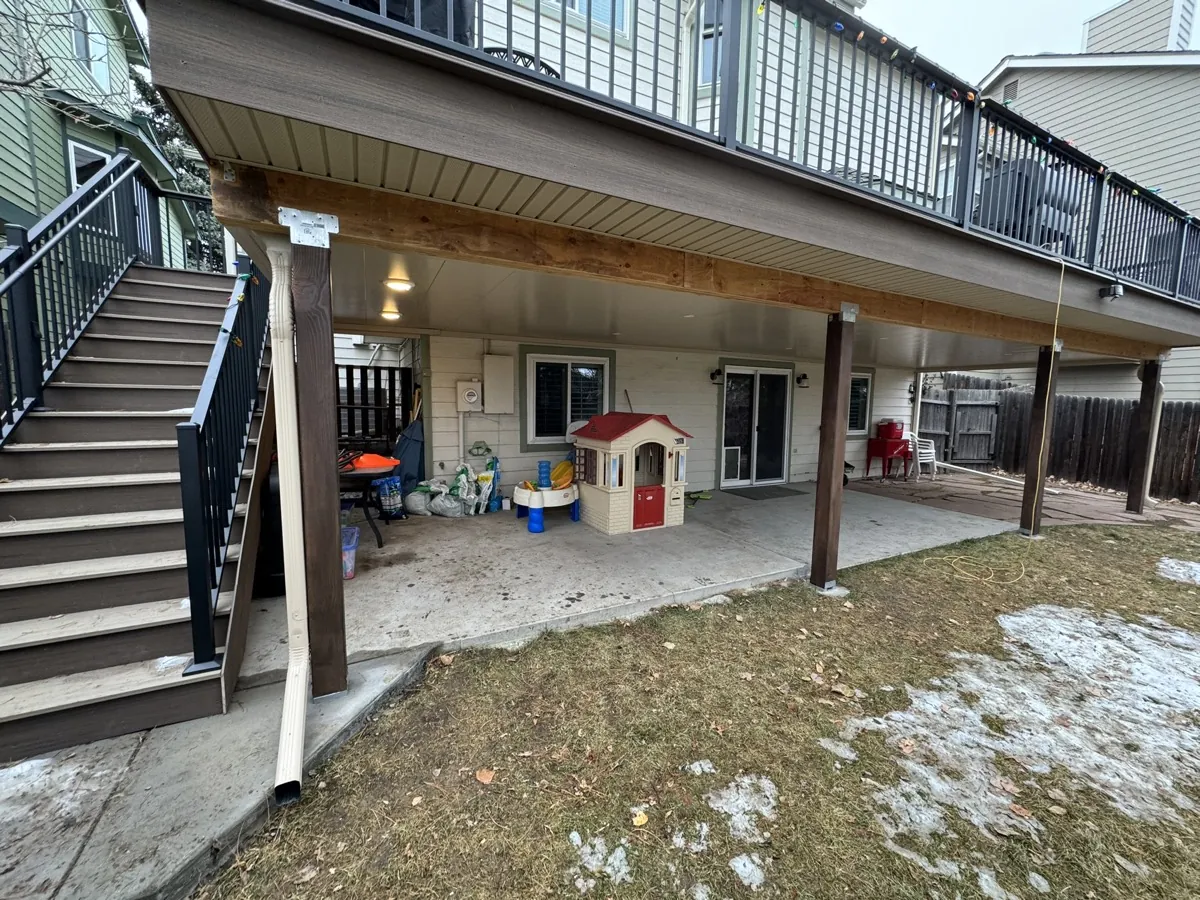
Why Galvanized Steel and Not Aluminum
Here is where we plant our flag. We build the ceiling in heavy-gauge galvanized steel, and in hail alley that is not a preference, it is the right engineering answer. Steel takes a hail strike and springs back. It does not carry a dent the way aluminum does, and it does not crack the way vinyl does. The zinc coating protects it from the freeze-thaw cycling that comes with sitting at 6,000 feet, and the powder-coat finish over the top holds its color against the intense Front Range UV.
Aluminum has its place. It is light, it does not rust, and it is fine for a lot of projects in a lot of climates. Colorado Springs is not one of them for a ceiling that has to eat hail. Aluminum dents, and once it dents it never un-dents. Vinyl and plastic panels are worse: they go brittle in the UV and the cold, and a hard hail season can crack a vinyl underdeck ceiling that looked fine the year before. We do not install either for a residential Underdeck ceiling here, and we will tell you exactly why on-site if you ask.
The Drainage Has to Survive the Storm Too
People focus on the panels, but in a hail-alley climate the drainage is just as important. A Colorado Springs afternoon monsoon storm, the kind that often brings the hail, drops a lot of water in a very short window. The Underdeck gutter and downspout have to move that surge without backing up, and they have to keep moving it after a hailstorm has knocked a season of debris loose into the channels all at once.
We size the gutter and downspout for the peak Colorado Springs storm, not a gentle average rain. That is the difference between a system that keeps the patio dry through a July monsoon burst and one that overflows the first time the sky really opens up. It is also why we build the drainage in the same heavy-gauge material as the panels. A crushed aluminum gutter is a slow leak waiting to happen. A steel channel takes the hit and keeps carrying water.
What This Buys You on a Colorado Springs Home
The payoff is a lower level you can actually use. Colorado Springs homes on sloped lots, the walkout builds common in Flying Horse, Briargate, and the newer sections east and north of the city, have a main-floor deck sitting high above a lower patio. Undercovering that deck turns a shaded, dripping, hail-battered dead zone into a finished outdoor room with a clean ceiling over it. From the west-side neighborhoods with a Pikes Peak or Broadmoor view to the newer developments on the plains, that dry lower level is often the most-used part of the house from May through October.
Because we build it to survive hail alley the first time, it is a project you do once. The lifetime warranty on materials and workmanship is not marketing. It is a reflection of what the material can take. When you build the ceiling out of something that shrugs off the exact thing this climate throws at it hardest, you are not signing up for a replacement in ten years. You want the full picture before you commit, which is exactly what a Colorado Springs Underdeck system is designed to deliver, and it starts with the right material overhead.

How the Storm Season Actually Runs Here
If you are new to the Front Range it helps to know the shape of the season, because it is why we build the way we do. The hail concentrates in the summer monsoon window, roughly July into early September, when moist air pushes up against the mountains and boils into afternoon storms almost daily. A morning can start clear and calm, and by two or three o’clock a cell drops off the peaks and hammers a few square miles with hail and a hard, short downpour. That is the pattern that shapes Colorado Springs exteriors. It is not a steady all-day rain that a roof and a gutter can casually shrug off. It is a violent burst of ice and water compressed into fifteen minutes, and then it is gone.
An Underdeck ceiling has to be ready for that specific event, not a generic average. The panels have to take the impact from wind-driven hail coming up under the deck at an angle, and the drainage has to move a surge of water without backing up while a season of debris is knocked loose into the channels at the same moment. On a west-facing deck near the Broadmoor or Cheyenne Mountain, storms rolling in off the mountains hit hardest, and the ceiling on that side of the house sees the worst of it. Building in heavy-gauge galvanized steel and sizing the gutter for the peak Colorado Springs burst is not overkill here. It is matching the material to the actual weather, which is the whole job.
The neighborhoods spreading east and north onto the plains, out toward Falcon and Monument, are just as exposed. Open ground catches wind-driven hail with nothing to break it, and newer walkout builds in Flying Horse and Briargate put a tall deck high above a lower patio where that dry, protected room is worth the most. Wherever the home sits, the storm cycle is the constant, and a ceiling built to survive it the first time is a ceiling you never have to think about again.
Colorado Springs Hail and Underdeck Questions
Is Colorado Springs really that bad for hail?
Yes. Colorado Springs and the surrounding Front Range see some of the most frequent damaging hail in the country, concentrated in the summer monsoon months. It is a defining feature of the local climate and it should shape any exterior material choice, including an Underdeck ceiling.
Will hail dent a galvanized steel Underdeck ceiling?
Heavy-gauge galvanized steel takes a hail strike and holds its shape far better than aluminum or vinyl. That is exactly why we build the ceiling and the drainage in steel for Colorado Springs. It is the material that survives hail alley without asking you to repair it every summer.
Why not aluminum, since it does not rust?
Aluminum does not rust, but it dents on hail impact and never recovers. In a hail-alley climate a dented, cracked aluminum ceiling is a matter of when, not if. Galvanized steel resists the impact, and the zinc coating plus powder coat handle the rust and UV concerns aluminum was supposed to solve.
Does hail damage the drainage part of the system?
It can, on a lightweight gutter. A hard storm knocks a season of debris loose into the channels all at once and can crush a flimsy gutter. We build the drainage in the same heavy-gauge steel and size it for the peak Colorado Springs storm so it keeps carrying water after a hailstorm, not just before one.
Is the system covered against hail?
Our Underdeck systems carry a lifetime warranty on materials and workmanship, which reflects how the heavy-gauge steel holds up to the Front Range climate. We are glad to walk through exactly what the warranty covers during a free on-site visit so you know what you are getting before anything is ordered.
Build It Once, for Hail Alley
We will walk your deck, look at your exposure, and show you why the right material overhead matters here. Colorado natives, employee-owned, lifetime warranty.
Walk Your Deck With Us (303) 481-1967See our full Colorado Springs page · More posts · Book a free design consultation